
In today’s time, your GPA becomes that one number that follows you everywhere. You see it after every semester, and you think about it more than you expect. A small drop feels heavy, and a small increase gives relief, because you know this number keeps showing up in admissions, internships, and shortlisting.
At the same time, keeping that number high is not easy at all. You deal with assignments from different subjects, overlapping deadlines, and days when your energy is already low. A lot of students also handle part time work or family responsibilities, due to which study time gets split and focus breaks in between.
Why GPA Keeps Showing Up Everywhere
Colleges store GPA on transcripts, and they check it early in the process. Recruiters also scan it quickly when they go through applications, because it gives them a fast way to compare students without reading everything in detail.
That is why students start treating GPA like a deciding factor. You may have skills or interest in a subject, but if your grades do not reflect that consistently, it still affects how others read your profile at first glance.
What Students Actually Deal With
A normal semester does not run in a straight line. You get assignments from different courses at the same time, and many of them require research, writing, and proper formatting. One delay in one subject starts affecting the next submission.
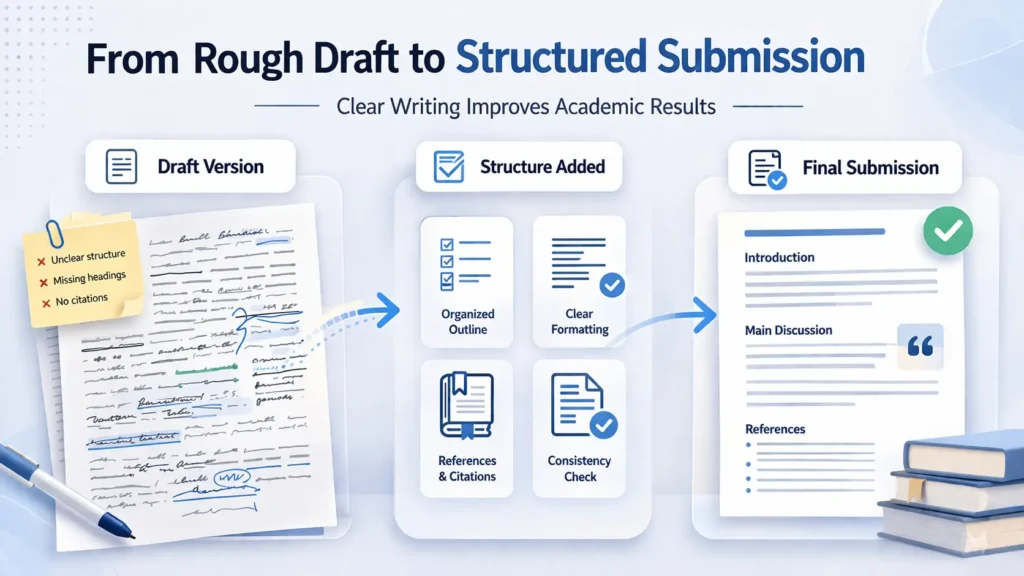
Then comes the writing part, which many students struggle with. Academic formats, referencing styles like APA or MLA, and structuring arguments take time to understand. Even when the idea is clear in your head, putting it in proper form becomes difficult.
When this keeps happening, you rush some submissions just to meet deadlines. Marks drop not always because of a lack of understanding, but because the presentation and structure are not strong.
Quick Snapshot of GPA Pressure
You may notice these common patterns during a semester:
- You keep checking grades after every test and assignment
- You compare your GPA with classmates more than you expect
- You delay difficult tasks and rush them near deadlines
- You feel pressure building when results do not match your effort
| Situation | What Usually Happens |
|---|---|
| Multiple deadlines in a week | You rush submissions and miss small details |
| Difficult writing format | You lose marks even when ideas are correct |
| Limited time due to work | You split focus, and quality drops |
| Back to back assignments | You repeat mistakes without fixing them |
Where External Support Enters
At this stage, some students start looking for outside help. You may search online and come across a reliable essay writing service that offers structured drafts based on your requirements. You share instructions, and they return a formatted assignment with proper sections and references.
When you go through that draft, you notice how the introduction is built, how points are arranged, and how sources are cited. That exposure itself starts changing how you approach your own work.
Learning Through Real Examples
Instead of only reading theory, you get to see a full assignment done properly. You can check how arguments are expanded, how paragraphs connect, and how evidence is placed inside the content without breaking flow.
Over time, you start applying the same pattern in your own submissions. Your writing becomes more organised, and small mistakes in formatting or structure start to reduce without extra effort.

Managing Time Without Constant Pressure
When writing takes less time, you get space to focus on understanding the subject. You spend more time reading concepts instead of worrying about how to present them in the final document.
Deadlines become easier to manage because you are not starting everything from scratch each time. You plan your work better, and your submissions become more consistent across subjects.
Feedback and Gradual Improvement
Professors give feedback on submitted assignments, and that feedback becomes more useful when your structure is already clear. You can actually see where your argument is weak or where clarity is missing.
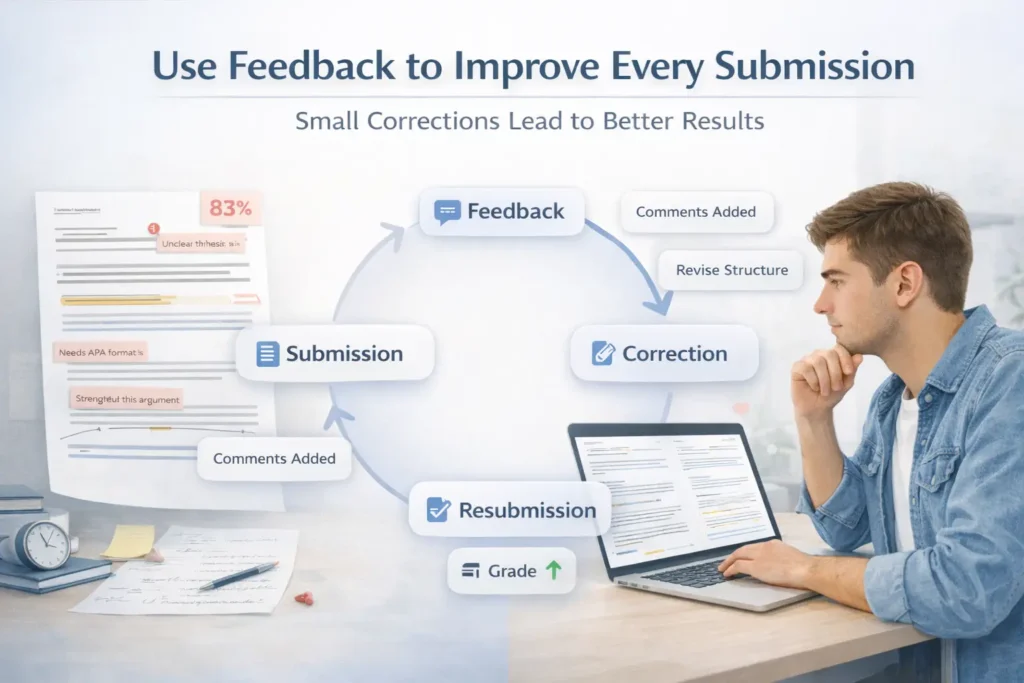
You carry those corrections into the next assignment. The same mistake does not repeat again and again. That is how improvement starts showing in grades over time, and GPA begins to move in a better direction.
Snapshot of Improvement Phase
You may start noticing these changes once your workflow improves:
- You submit assignments before deadlines more often
- You spend less time fixing formatting mistakes
- You feel less stress during busy academic weeks
- You understand the professor’s feedback more clearly
| Change Area | What Shifts Over Time |
|---|---|
| Assignment quality | Structure becomes clearer and more organised |
| Time usage | More time goes into understanding instead of rushing to write |
| Error frequency | Repeated mistakes reduce across submissions |
| Feedback response | Corrections are applied in the next assignment |
Confidence and Academic Behaviour Changes
When your GPA starts improving, and you score a good GPA, your behaviour also shifts slowly. You begin to approach assignments with less hesitation, and you do not delay work as much as before. A student who earlier avoided difficult topics starts attempting them with a clearer plan.
Class participation also changes with time. When you know your submissions are strong, you speak with more clarity during discussions. You answer questions without guessing fir 2nd time every line, because you have already seen how structured responses look in practice.
Subject Level Support and Targeted Help
Not every subject creates the same problem. Some students struggle more with essays, while others find research papers difficult due to data analysis and argument building. That is where targeted support becomes useful.
If a student is dealing with heavy research oriented assignments, using research paper writing services gives a clear example of how arguments are expanded and how sources are used properly. That kind of focused exposure works better than generic study material.
Reducing Stress Without Ignoring Work
Academic pressure builds when tasks keep stacking without a clear plan. When you know you have support for the writing part, your mind stays calmer during busy weeks. You do not feel that constant rush to finish everything at once.
Your schedule becomes more controlled. You divide time between understanding subjects and completing submissions instead of handling both under pressure at the last moment. That reduces errors and improves output quality.
Using Support in a Controlled Way
A student who uses external help without involvement does not improve much. The difference comes when you stay involved in the process. You read the draft, you understand the flow, and you compare it with your own attempt.
You also check feedback from professors along with the structured draft. That combination shows where your understanding is correct and where your writing needs adjustment. Over time, your own work starts matching expected academic standards.
Skill Development Through Repetition
Writing improves when patterns repeat correctly. When you keep seeing properly structured assignments, your brain starts recognising what works. You begin to form paragraphs with clearer direction and better flow.
You also find that referencing becomes easier after repeated exposure. You stop guessing formats and start applying them with more accuracy. These small corrections add up and reflect in grades across subjects.
Long Term Academic Direction
A higher GPA does not come from one assignment. It builds when consistency stays across semesters. When your submissions remain structured and timely, your overall performance becomes stable.
At the same time, the skills you develop during this process stay useful beyond academics. Writing clearly, organising ideas, and managing time are things that continue in professional work as well.
Turning Support Into Consistent Output
Support alone does not change results. Your approach towards using that support decides the outcome. When you combine your own effort with structured guidance, your work starts improving without sudden pressure.
That is how GPA becomes a reflection of your actual capability instead of random performance swings. You stay consistent, you avoid last minute errors, and your academic record starts showing steady improvement.
Common Questions Students Ask
Can writing services directly increase GPA?
A writing service does not change grades on its own. A student improves grades after understanding the structure and applying it in future assignments.
Is it safe to depend on external help for every assignment?
A student who depends fully on external help does not improve writing skills. A student who studies the drafts and applies patterns improves gradually.
How quickly can GPA improve after using structured support?
A GPA does not change after one submission. A GPA changes after consistent improvement across multiple assignments and semesters.
What should a student focus on while using such services?
A student should focus on structure, argument clarity, and referencing style. A student should compare drafts with their own writing and apply corrections in the next work.