
A moment comes when a student checks the GPA calculated personally and then compares it with the number shown by the registrar, and the two values do not match, which creates doubt because both seem to be based on the same grades and courses.
This difference does not come from a mistake in most cases, but from how GPA is calculated using specific academic rules, which means the same set of grades can produce different results depending on what is included, how it is weighted, and how the institution applies its policy.
Direct Answer
Your calculated GPA and registrar GPA can differ because the registrar follows official academic rules for including courses, credit hours, and grade points, while personal calculations often miss some of these conditions or apply them differently.
The key point is that GPA is not just an average of grades, because it depends on how each course is counted and weighted, and that is where the difference begins.
| Factor | Personal Calculation | Registrar Calculation |
|---|---|---|
| Courses Included | Sometimes all | Only eligible courses |
| Credit Weighting | Often simplified | Fully weighted |
| Policies Applied | Usually ignored | Strictly applied |
What Registrar GPA Actually Means
Registrar GPA is the official GPA calculated by the college or university using its academic policies, and it is the number that appears on transcripts and is used for academic standing, scholarships, and graduation decisions. That is why the official transcript matters more than a rough personal estimate when schools review your academic record.
This number is not calculated casually, because it follows a defined system where each course is evaluated based on credit hours, grade points, and institutional rules that decide whether a course should be included in the calculation.
Why Your Calculated GPA Can Be Different
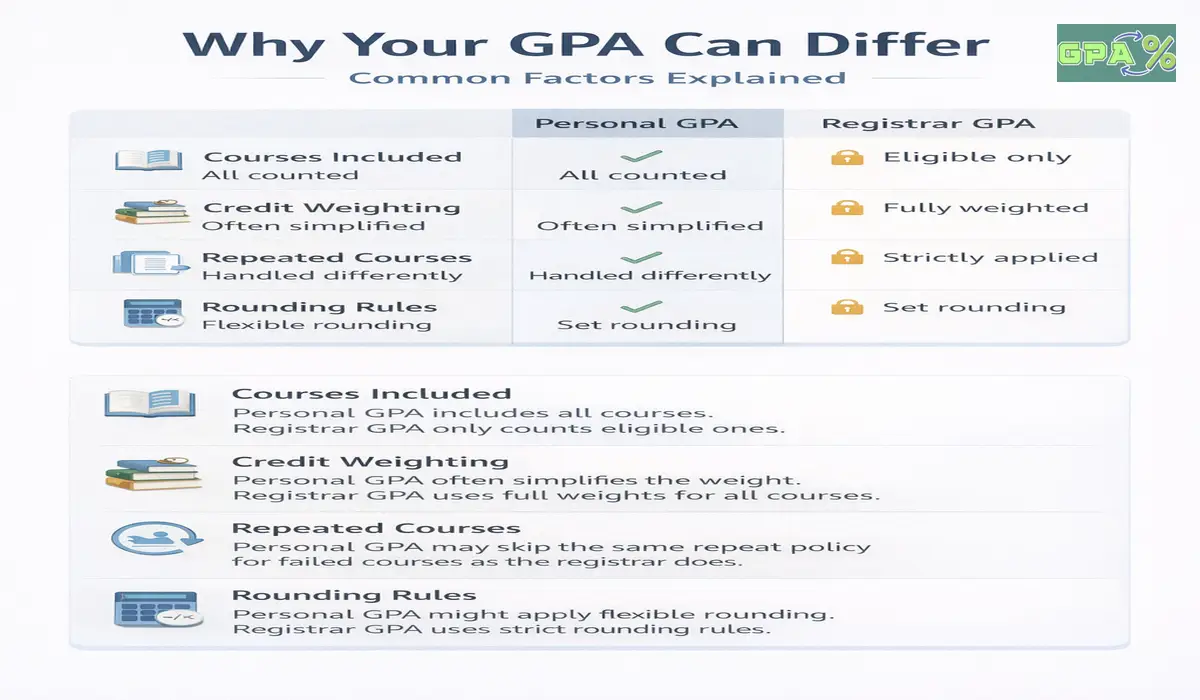
When GPA is calculated manually, it is common to include all courses and treat them equally, but registrar GPA does not follow that approach, because some courses are excluded, some are weighted differently, and some are treated based on special rules.
The difference comes from how the calculation is structured rather than from the grades themselves, which means two methods using the same grades can still produce different results.
Common Reasons Behind GPA Differences
Course Inclusion Differences
Not all courses are counted in GPA, because some courses, such as pass or fail, transfer credits, or some electives, may be excluded depending on the academic policy of the institution.
This creates a difference when a student includes every course in a personal calculation, while the registrar excludes some of them.
Credit Hour Weighting
GPA is calculated by multiplying each course grade by its credit hours and then dividing by the total credits, so courses with more credits have a larger impact on the final number, while manual calculations sometimes treat all courses equally.
Because each course does not contribute equally, the final GPA shifts depending on how much weight each subject carries, so even when the same grades are used, the result changes based on how those grades are distributed across different credit hours.
Repeated Course Handling
When a course is taken again, the registrar may replace the earlier grade, average both grades, or count both attempts separately, depending on policy, which changes how the GPA is calculated.
When a student works out the GPA by hand without applying the same rule used by the registrar for repeated courses, the earlier and later grades may be treated differently than the official method, and this difference in handling changes the total grade points. As a result, the final number comes out different even though the same set of grades is used.
Rounding Differences
Registrar GPA may use specific rounding rules, which means the final value is adjusted based on institutional standards, while manual calculations may round differently or not at all.
This creates small differences that show up when you compare both numbers side by side, especially when decimal values change slightly due to rounding or when one or two courses are handled differently in the official calculation, which is why the gap may look confusing even though it follows the rules used by the institution.
A Simple Example to Understand the Difference
A student calculates GPA by averaging grades equally across four courses, while the registrar calculates GPA using credit hours, where one course carries more weight than others, and the results differ even though the grades are the same.
This shows that the method used to calculate GPA is just as important as the grades themselves.
Types of GPA That Create Confusion
A student may see different GPA values because institutions track multiple types of GPA for different purposes, which means the number shown in one place may not match another.
| GPA Type | Meaning |
| Semester GPA | Based on one term |
| Cumulative GPA | Based on all terms |
| Program GPA | Based on specific courses |
When different GPA numbers appear on your record, it becomes important to check which type of GPA each number represents, because this clarity helps explain why the values do not match.
Why Students Misunderstand This
The confusion comes from assuming that GPA is a single fixed number, while in reality, it depends on how the calculation is done and which courses are included in that calculation.
- GPA is not a simple average
- Not all courses are included
- Institutional rules change the result
When GPA Differences Are Normal
A small difference between your calculated GPA and the registrar’s GPA is common because manual calculations may include slight variations in rounding, course inclusion, or credit handling that are not visible at first glance. These differences usually appear at the decimal level and do not indicate any issue with your academic record.
In most cases, this happens because the registrar applies a fixed system for rounding and inclusion, while personal calculations may follow a simplified method, which creates a gap that looks confusing but follows expected rules.
When You Should Check the Difference
A larger difference between the two numbers needs attention, especially when the gap cannot be explained by rounding or minor calculation changes, because it may indicate that some courses or credits have been handled differently.
In such cases, you should review your transcript carefully to identify whether any course has been excluded, counted differently, or recorded incorrectly. This also helps you to understand the reason behind the mismatch.
How to Verify Your GPA Correctly
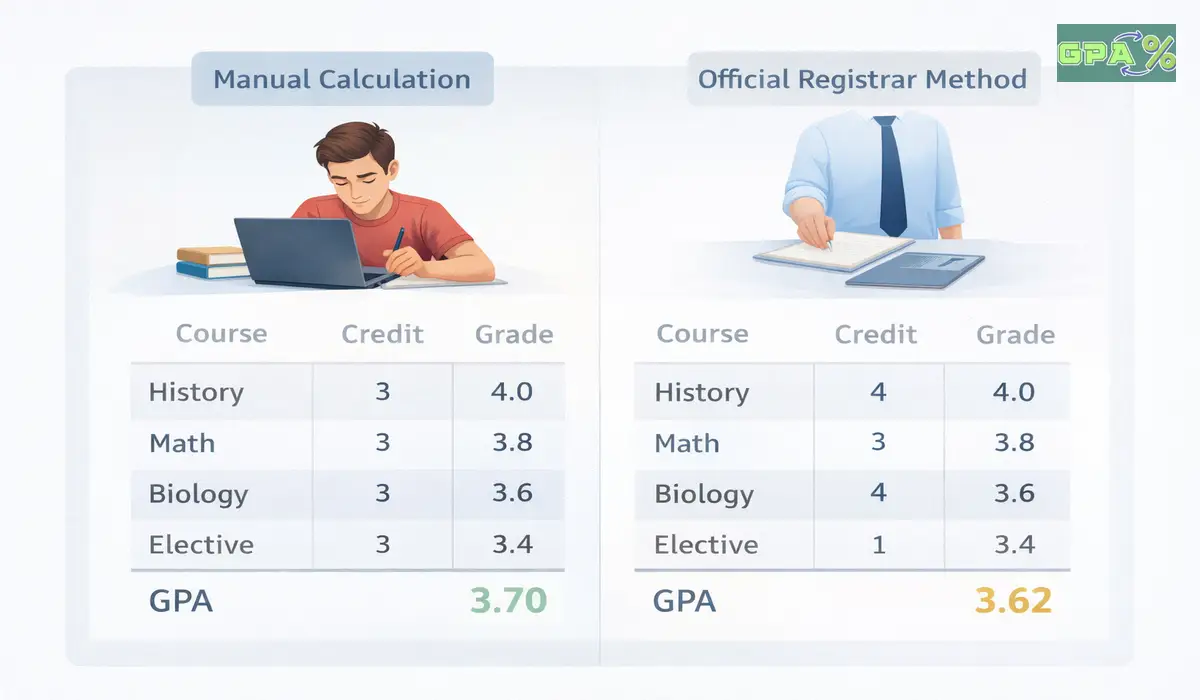
To match the registrar’s GPA, the same calculation method must be used, where each course grade is multiplied by its credit hours and then divided by the total number of credits included in the calculation. A school’s registrar’s GPA policy is the best reference for understanding which courses, credits, and exceptions are included.
When you look at which courses are counted and which are excluded, it becomes easier to bring your personal calculation closer to the official number, because the difference usually comes from inclusion rules rather than from arithmetic errors.
| Step | What to Check |
| 1 | Confirm included courses |
| 2 | Match credit hours |
| 3 | Apply grade points correctly |
| 4 | Follow rounding rules |
Common Situations That Cause Bigger Differences
Some situations create larger gaps between the calculated GPA and the registrar GPA, because they involve rules that are not obvious during manual calculation.
- Transfer credits are excluded from the GPA
- Pass or fail courses are not counted
- Repeated courses are handled differently
How to Align Your Calculation With Registrar GPA
The easiest way to reduce mismatch is to follow the same structure used by the registrar, where only eligible courses are included, credit hours are applied correctly, and grades are converted into grade points before calculating the average.
Once the same rules are applied, the calculated GPA and registrar GPA start moving closer to each other, which helps remove confusion and builds confidence in the final number.
FAQ
Why is my GPA different from the registrar’s GPA?
The difference appears because the registrar follows official rules for course inclusion, credit hours, and rounding, while personal calculations may not apply all these conditions.
Which GPA is correct?
Registrar GPA is the official GPA used for transcripts, academic standing, and graduation, so it is considered the correct value for institutional purposes.
Can the registrar’s GPA be wrong?
Registrar GPA is usually accurate because it follows a defined system, but if a major difference appears, checking the transcript helps confirm whether any entry needs review.
How can I match my GPA with the registrar’s GPA?
To match the registrar GPA, you need to follow the same calculation method with correct credit hours, proper course inclusion rules, and the same rounding standards used by the institution.
Conclusion
The difference between your calculated GPA and registrar GPA comes from how the calculation is structured, because the registrar applies specific academic rules that control which courses are included and how grades are counted, which means the final number reflects policy rather than a simple average of all grades.