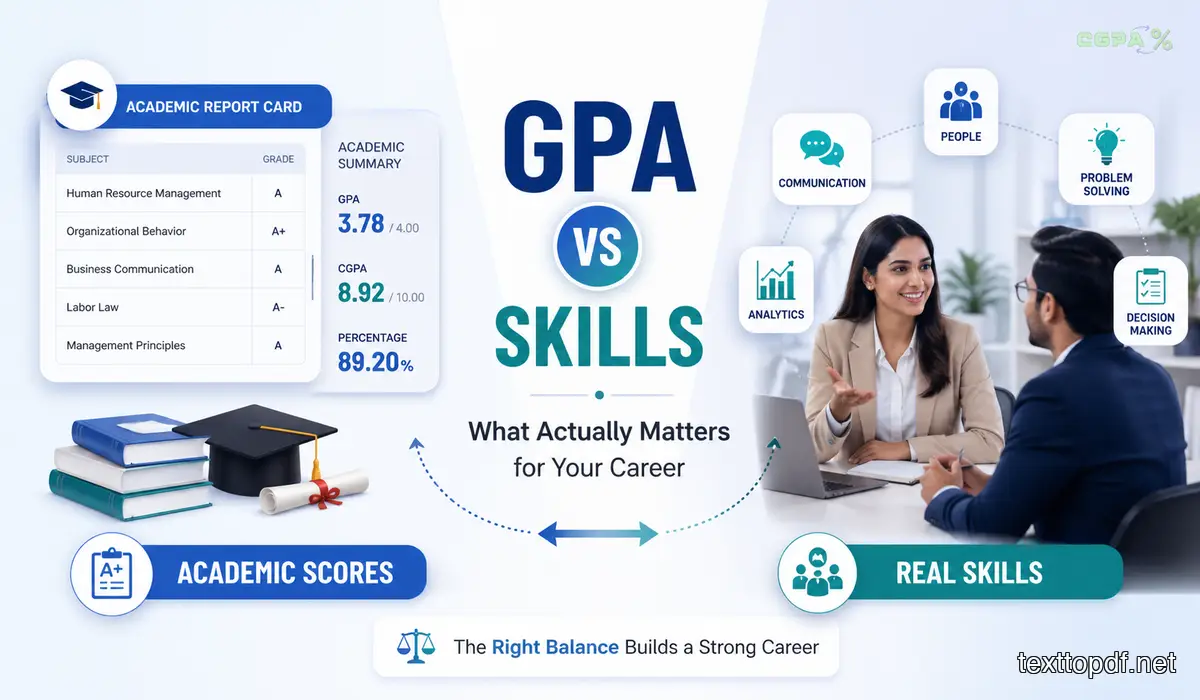
GPA, CGPA, marks, and percentage have always been key indicators of academic performance. These academic measures remain central in schools and colleges, where marks and percentages define performance benchmarks and help institutions evaluate students consistently. They reflect how a student performs across subjects and are often the first metrics recruiters review during hiring.
Strong academic scores signal discipline, commitment, and the ability to handle a proper learning process.
At the same time, the job market now places strong weight on practical skills. Employers expect candidates to handle real workplace situations, communicate clearly, and solve problems beyond textbooks. This shift is visible in HR roles, where interaction, decision-making, and people management matter daily.
For students who want to build a career in HR, the real advantage comes from strong academic performance and practical exposure. Many students now complement their GPA with practical experience, which they get from HR Certification Courses, which help them apply academic concepts in real workplace scenarios and build job-ready capabilities alongside their scores.
Understanding GPA, CGPA, Marks, and Percentage
What Do GPA and CGPA Represent?
GPA and CGPA represent a student’s academic consistency over time. GPA reflects performance in a specific term, while CGPA shows overall performance across multiple semesters. A high CGPA shows that a student has maintained steady performance throughout their academic journey.
In HR talent acquisition, this consistency often creates a positive first impression. Recruiters view a stable CGPA as a sign of reliability and focus, which are important traits in roles that involve managing people and processes.
How Marks and Percentage Reflect Student Potential
Marks and percentage systems are widely used to evaluate academic knowledge. They allow institutions to set benchmarks and compare student performance across subjects.
For HR roles, these scores often act as initial evaluation criteria. Many companies set minimum percentage or CGPA requirements to shortlist candidates. This makes academic performance an important entry point into the hiring process.
Limitations of Academic Scores Alone
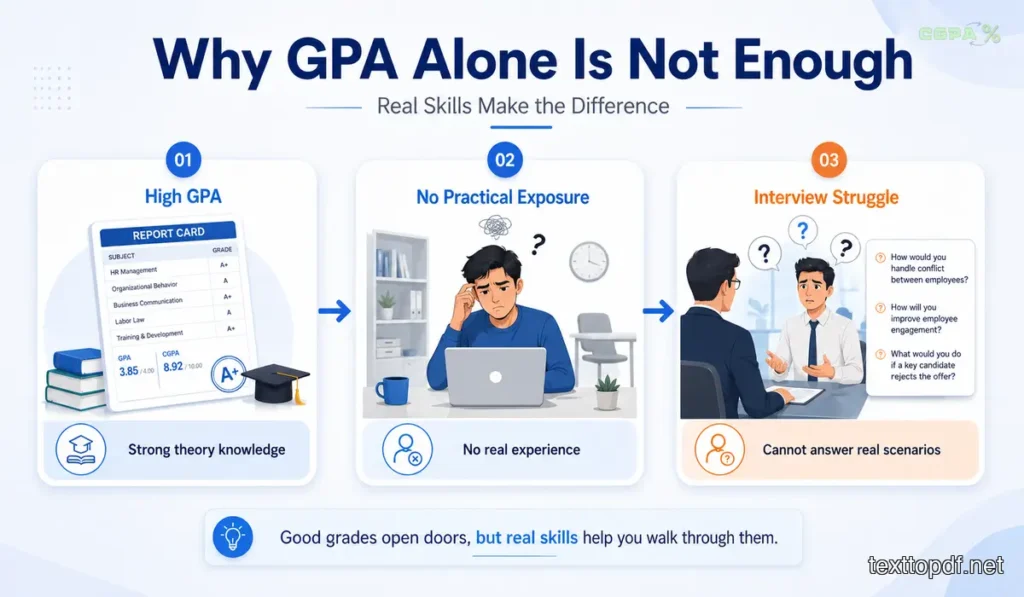
Academic scores, though important, do not always reflect workplace readiness. A student may have a high CGPA but still lack exposure to real HR scenarios, such as conducting interviews or handling employee concerns.
There is usually a gap between theory and practice. Classroom learning focuses on concepts, while HR roles require application. This gap becomes visible during interviews, where students are expected to answer situational questions and demonstrate practical understanding.
Why Skills Are Equally Important for HR Careers
The Evolution of HR Roles
HR roles have changed over time. Earlier, HR functions focused on administrative tasks like payroll and attendance. Today, HR professionals are involved in hiring strategy, employee engagement, and organizational growth.
This shift means that companies expect HR professionals to think critically, communicate clearly, and manage real-time challenges.
Academic scores alone cannot demonstrate these abilities.
What Recruiters Look for Beyond GPA
Recruiters now assess candidates on multiple parameters beyond GPA or percentage. Communication skills, problem-solving ability, and adaptability are key factors during interviews.
For example, an HR candidate may be asked how they would handle a conflict between employees or manage a hiring deadline. These situations require practical thinking, not just theoretical knowledge. Students who combine a strong CGPA with skill-based learning often perform better in such scenarios.
Essential HR Skills Every Student Should Develop
Students who pursue careers in human resource management need a balanced skill set that complements their academic performance.
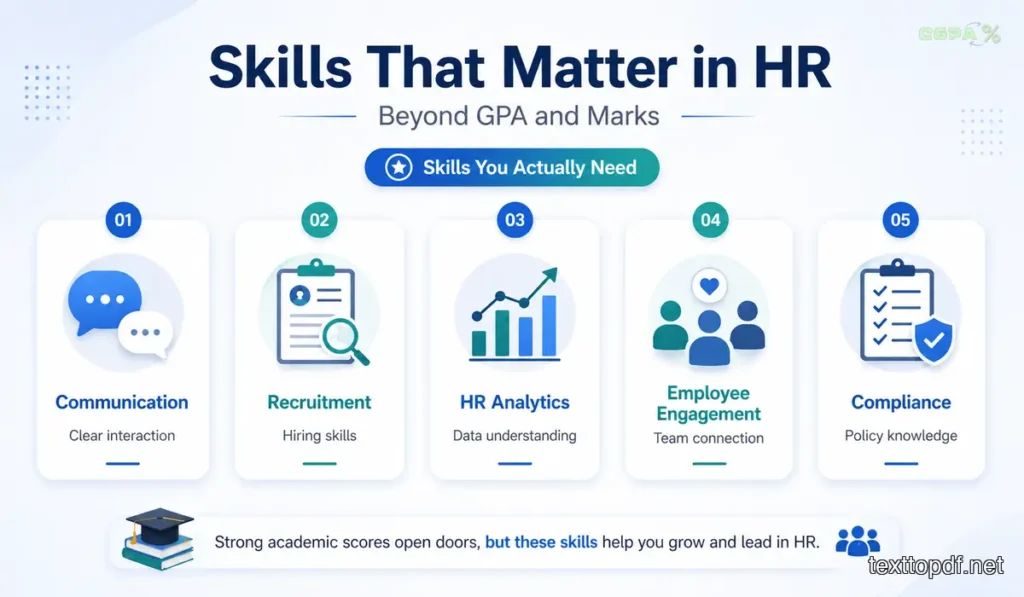
Talent Acquisition and Recruitment
Students learn how to source candidates, screen resumes, and conduct interviews. This skill connects directly to entry-level HR roles and campus hiring activities.
If you still feel confused about how GPA and CGPA actually work, you can check this detailed guide on understanding the difference between GPA and CGPA to clear your basics before moving ahead.
Communication and Interpersonal Skills
Clear communication helps in interviews, employee interactions, and conflict resolution. HR professionals work with people across levels, so strong interpersonal skills are necessary.
HR Analytics Basics
The ability to understand hiring data, performance metrics, and basic reports helps students support data-driven HR decisions and present insights during interviews.
Employee Engagement and Retention
Students learn how to keep employees motivated through activities, feedback, and workplace initiatives, which improves team stability.
Compliance and Labor Law Fundamentals
Knowledge of labor laws and compliance ensures HR processes follow legal standards and company policies.
These skills directly impact job readiness and improve a student’s ability to perform in real HR roles.
Bridging the Gap Between Academic Scores and Practical Skills
Why Students with High CGPA Still Struggle in Interviews
Many students with high CGPA face challenges during interviews when practical exposure is limited. They may understand HR concepts well but find it difficult to answer situational questions or explain how they would act in real workplace scenarios.
Importance of Hands-On Learning and Exposure
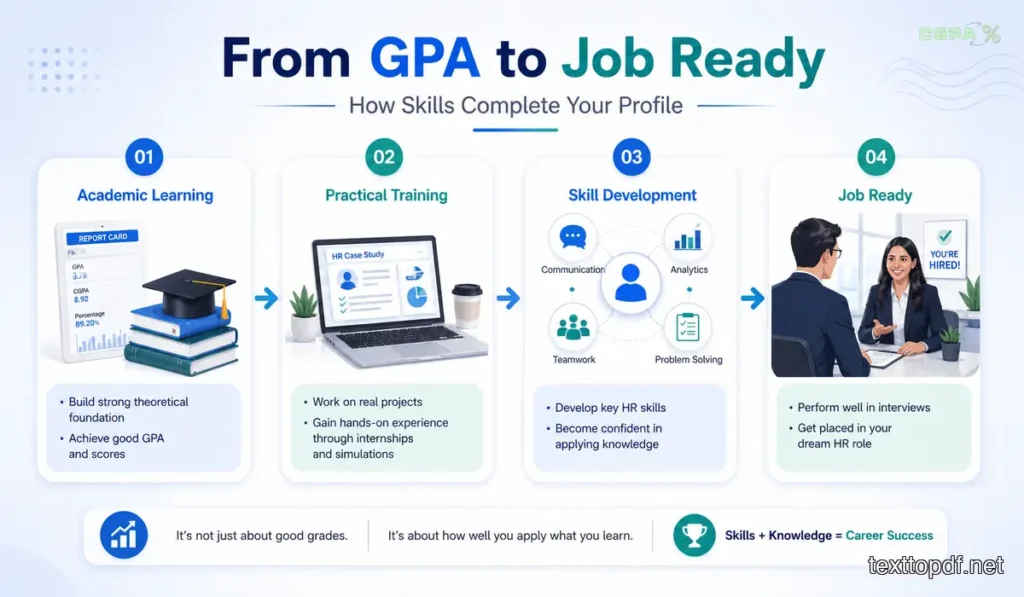
Hands-on experience through internships, projects, and simulations helps students apply their academic knowledge. Guided work on real HR tasks such as mock interviews, employee case handling, and recruitment exercises builds clarity and confidence.
Role of Certifications and Practical Training
Certifications and practical training programs help students convert marks and percentages into job-ready skills. They provide structured exposure to real scenarios, allowing students to move beyond theory and demonstrate applied knowledge during interviews.
How HR Certification Courses Help Students Build Job-Ready Skills
Practical Learning and Real-World Exposure
HR Certification Courses focus on practical learning through case studies, simulations, and projects. Students get the opportunity to work on real hiring scenarios, employee engagement strategies, and HR processes.
This exposure allows them to understand how concepts are applied in actual workplaces, making them more prepared for job roles.
Industry-Relevant Curriculum
These training programs include updated HR practices, tools, and frameworks used by companies. Students learn about modern recruitment methods, HR analytics tools, and employee management strategies.
This ensures that their knowledge matches current industry expectations.
Building Confidence and Interview Readiness
Application-based courses prepare students for interviews. They have the skills to provide answers to scenario-based questions and engage in practical discussions.
This improves confidence and increases their chances of giving an excellent performance during the recruitment process.
As you know, academic scores still play an important role in your career, and this guide on the importance of CGPA and percentage in our career explains how they impact your opportunities, along with your skills.
Benefits of Combining GPA with HR Skills
Better Job Opportunities
Students with strong GPAs and practical HR skills have access to more job opportunities. They meet academic criteria and also demonstrate readiness for real roles.
Stronger Resume Profile
A resume that includes both a high CGPA and relevant skills creates a strong impression. It shows both academic discipline and practical capability.
You can also try many good online ATS-optimised AI resume builders to build a strong resume for yourself
Higher Confidence in Interviews
Students who understand real HR scenarios tend to perform better in interviews. They can answer questions with clarity and provide practical examples.
Faster Career Growth in HR
Candidates who start with both academic strength and skills adapt quickly in their roles. This can lead to faster growth within HR functions.
How to Choose the Right HR Certification Course
Curriculum Relevance
The course content should match current HR practices and real-world expectations. It should include updated topics such as recruitment strategies, HR tools, and employee management concepts.
Practical Exposure
Courses that include case studies, simulations, and projects offer better learning outcomes. Practical exposure helps students apply concepts and build confidence.
Industry Recognition
A certification with industry recognition adds credibility to a student’s profile. It improves trust among recruiters during the hiring process.
Career Support
Career support, such as resume creation and interview preparation, helps students in job readiness and better performance during the placements.
Career Pathways in HR for Students
Students with a combination of GPA and HR skills can pursue multiple career paths.
HR Executive
Handles recruitment, onboarding, and employee records. This is a common entry-level role where students apply basic HR processes and coordination skills.
Talent Acquisition Specialist
Focuses on sourcing, screening, and hiring candidates. This role requires strong communication skills and an understanding of recruitment strategies.
HR Generalist
Manages multiple HR functions such as recruitment, employee relations, and policy implementation across departments.
HR Analyst
Works with HR data, hiring metrics, and performance reports to support decision-making within the organization.
Each of these roles requires both academic understanding and practical skills.
Conclusion
GPA, CGPA, marks, and percentage form the foundation of a student’s academic journey. They help in opening doors to job opportunities and create a strong first impression.
At the same time, skills play a major role in converting those opportunities into actual job offers. Students who combine academic performance with practical HR knowledge are better prepared for interviews and workplace challenges.
Continuous skill development, along with strong academic scores, helps students move toward long-term career growth. Many students begin this journey by adding structured learning through platforms that offer job-ready HR training programs, helping them connect academic knowledge with real workplace application and improve employability.
FAQs
Does GPA matter for HR jobs?
Yes, GPA and CGPA often act as initial screening criteria. Many companies use academic scores to shortlist candidates, especially for entry-level HR roles.
Can skills compensate for a low CGPA?
Skills can improve job chances even with a lower CGPA. Strong communication, practical knowledge, and interview performance can help candidates stand out.
Are HR certification courses useful for students?
Yes, HR certification courses help students gain practical exposure. They prepare students for real HR tasks and improve confidence during interviews.
What is a good CGPA for HR jobs?
A CGPA above average often meets basic eligibility criteria in many companies. Strong skills and practical exposure can further improve selection chances.